Customer churn is one of the most pressing challenges for enterprises today. While organizations collect large volumes of customer data, its value is often limited by silos, especially between structured customer profiles and unstructured feedback such as reviews and sentiments. Without a unified data and AI foundation, identifying churn risks early becomes difficult and reactive.
Oracle AI Data Platform (AIDP) addresses this gap by bringing together data ingestion, processing, governance, and AI-driven analytics in a single, scalable environment on OCI. By combining structured and unstructured data with built-in AI models, enterprises can move beyond traditional reporting to predictive insights.
This blog demonstrates how Oracle AIDP enables intelligent customer churn analysis and data-driven retention strategies.
Objective
The objective is to analyze customer churn behavior by combining unstructured customer review data with structured customer profile data and leveraging AI models to predict churn. The results are stored in Oracle Autonomous Data Warehouse (ADW) and visualized using Power BI.
Oracle AIDP Churn Analysis – Execution Steps
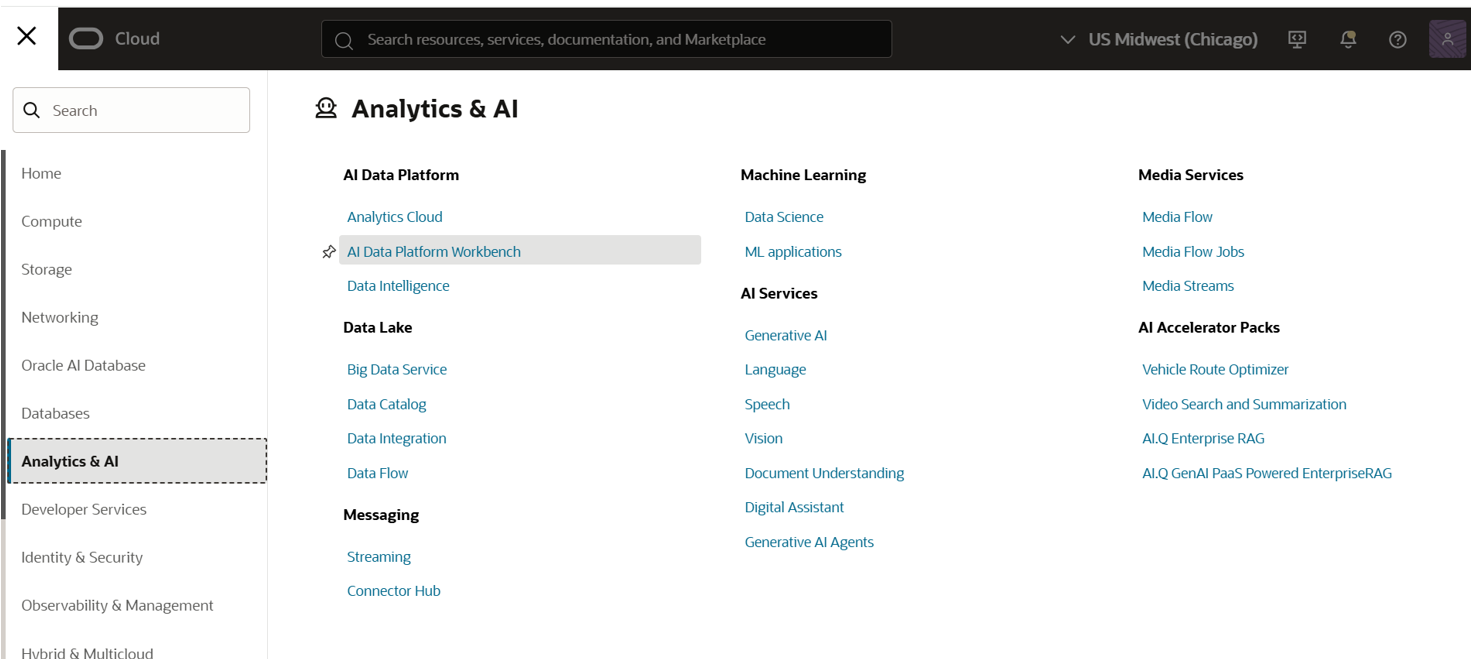
Step 1: Go to OCI Console → Analytics & AI→AI Data Platform.
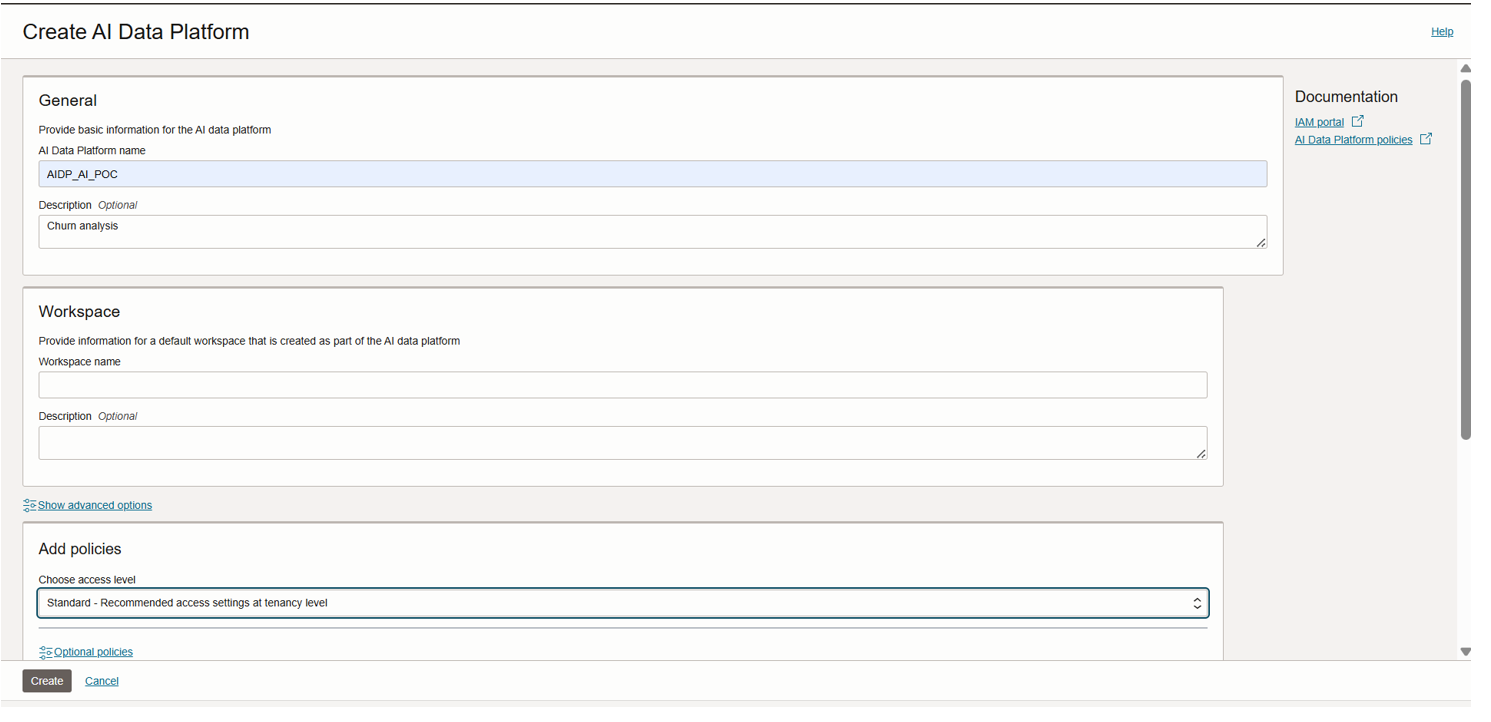
Step 2: Create AI Data Platform. Provide a relevant name and add respective policies.
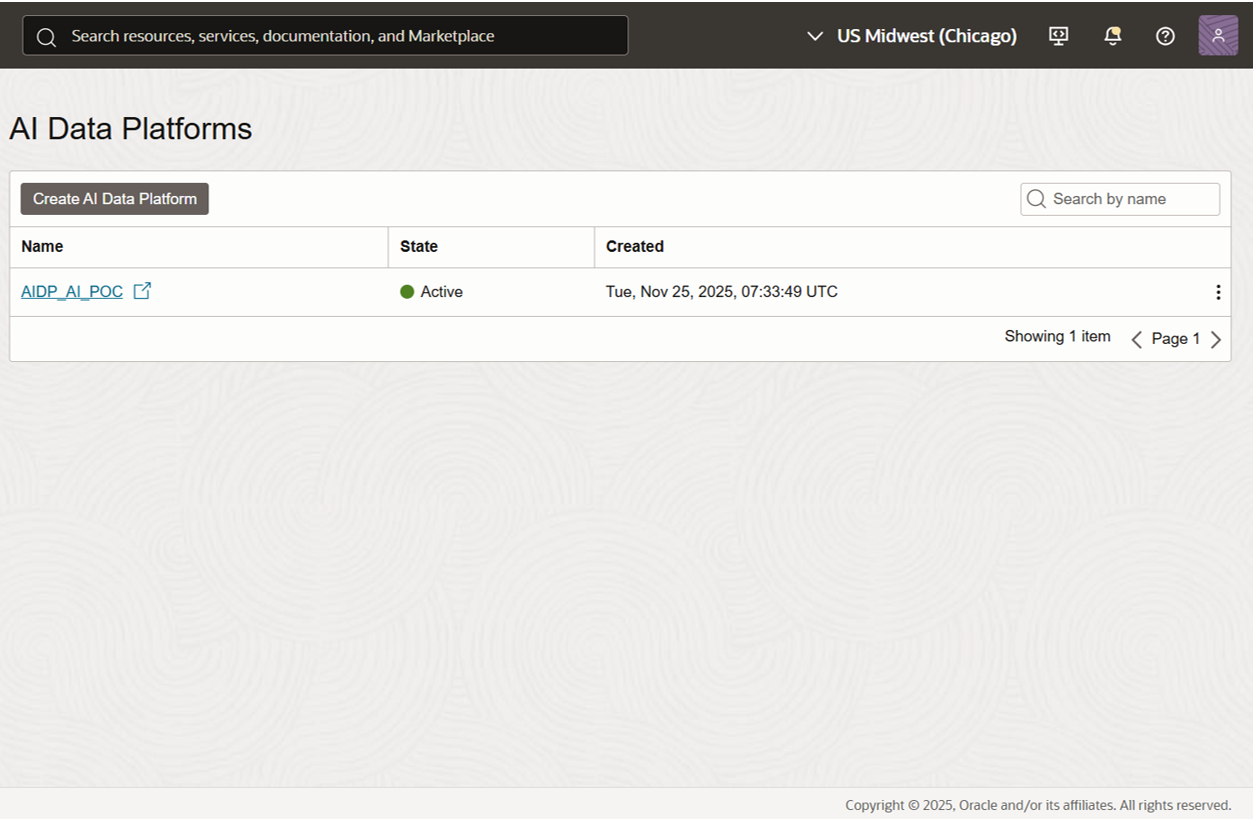
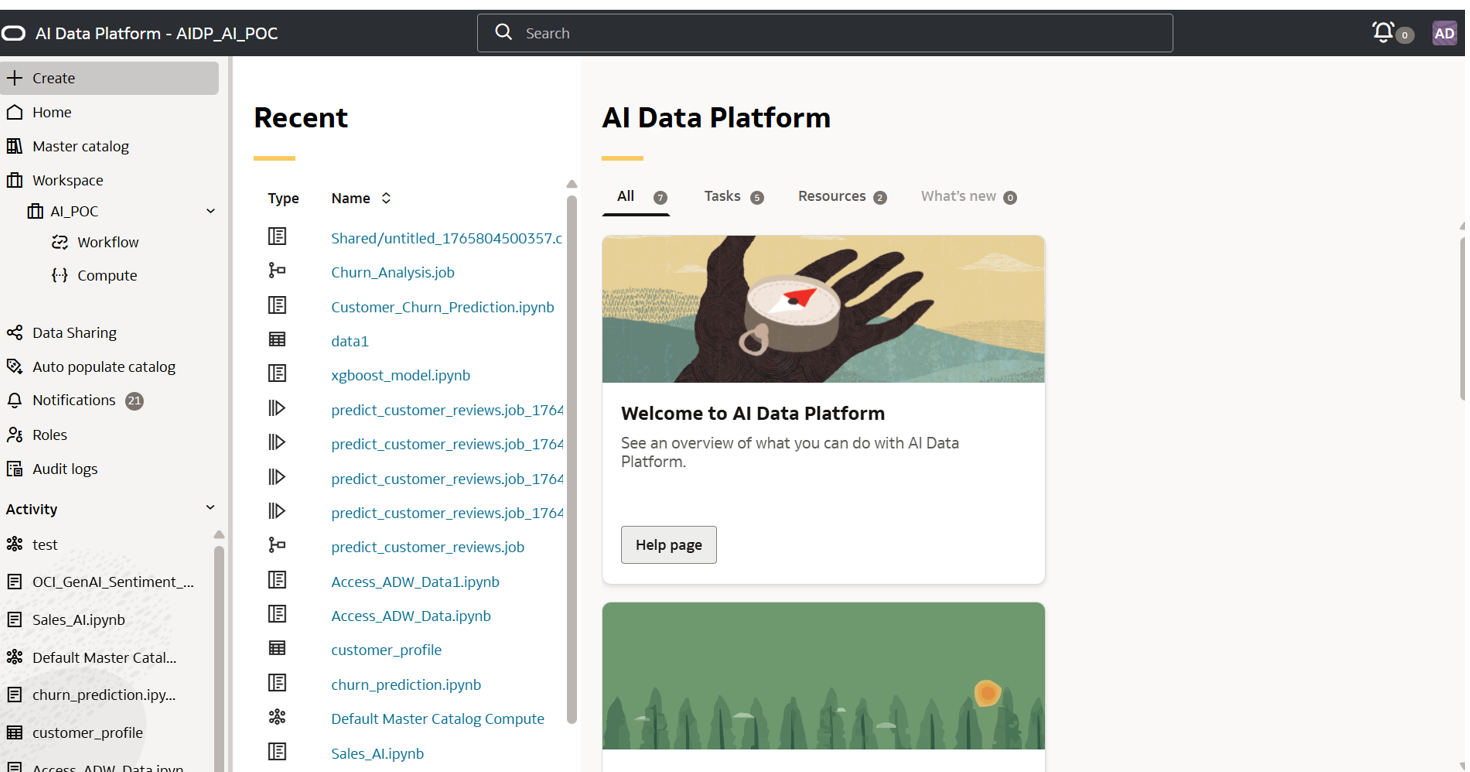
 Step 3: The AI Data Platform is created and it looks similar to image below.
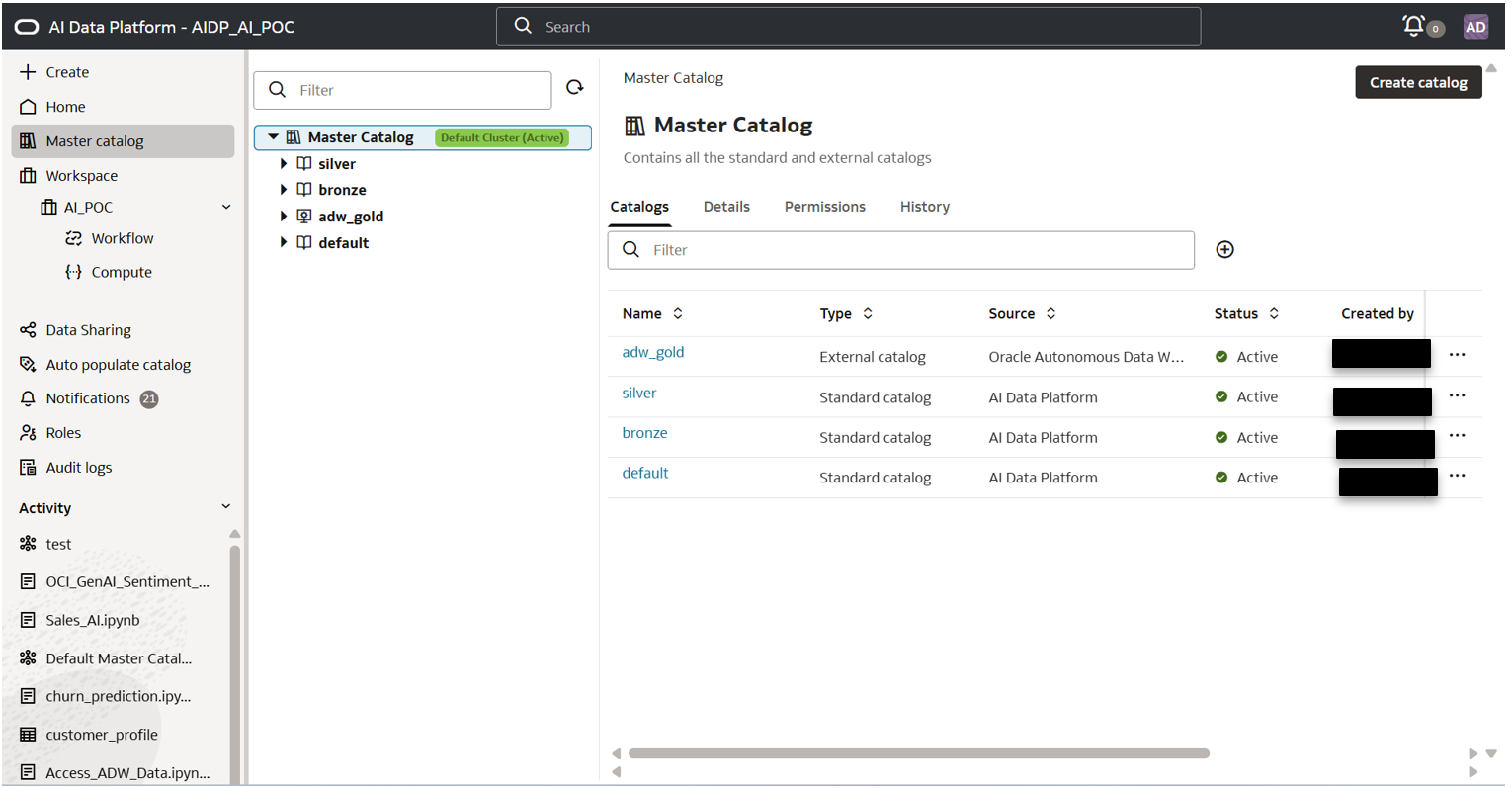
Step 4: Data Sources.
1) Bronze Layer: A Standard Catalog with a schema(crm).
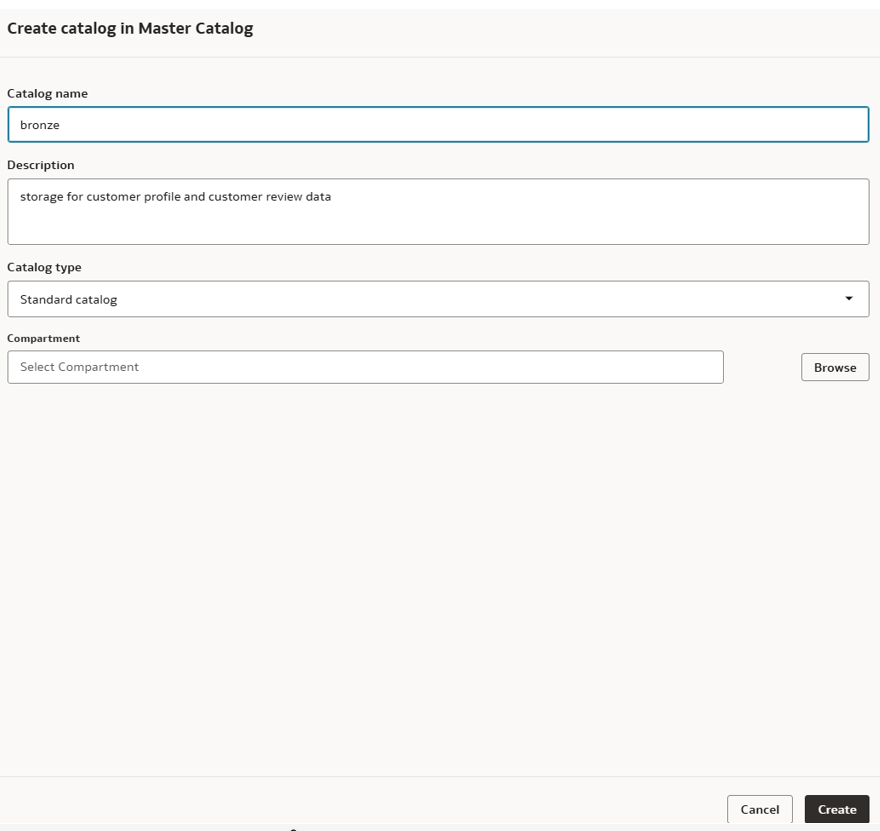
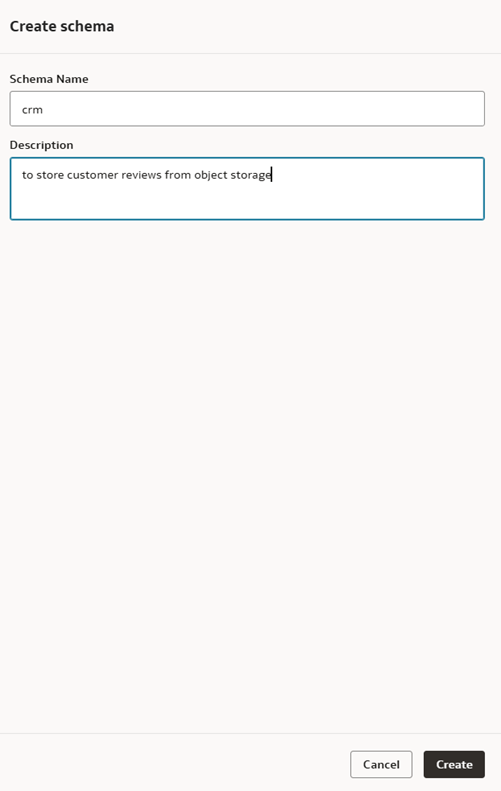
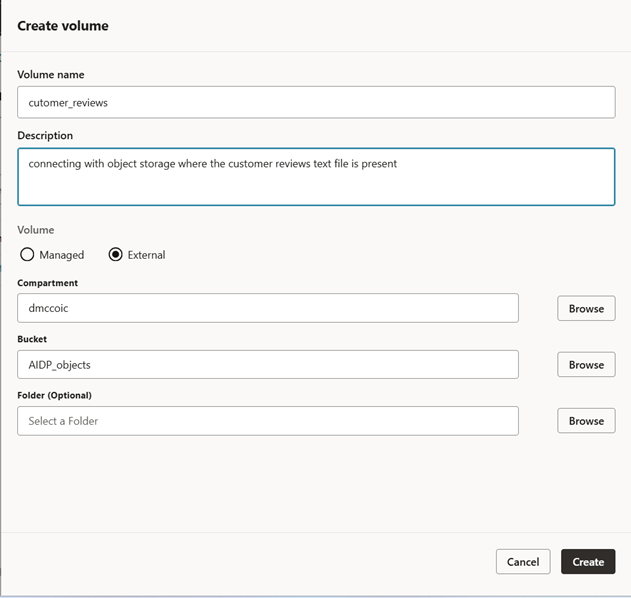
i) Get Customer Review Data from External Volume(Object Storage)
Customer review data is stored in Oracle Object Storage. This data consists of textual feedback provided by customers, which reflects customer sentiment, satisfaction levels, and potential churn indicators.
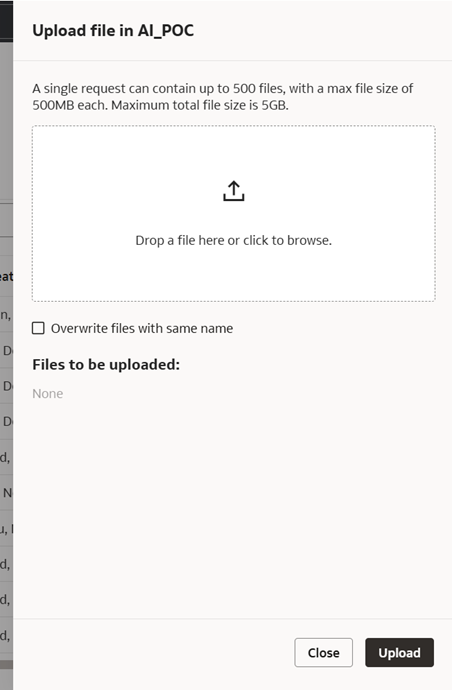
ii) Get Customer Profile Data by uploading CSV file to Table
Customer profile data is maintained in CSV format and includes structured attributes such as customer ID, demographics, account details, tenure, subscription type, and usage patterns.
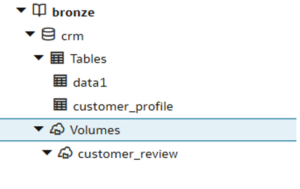
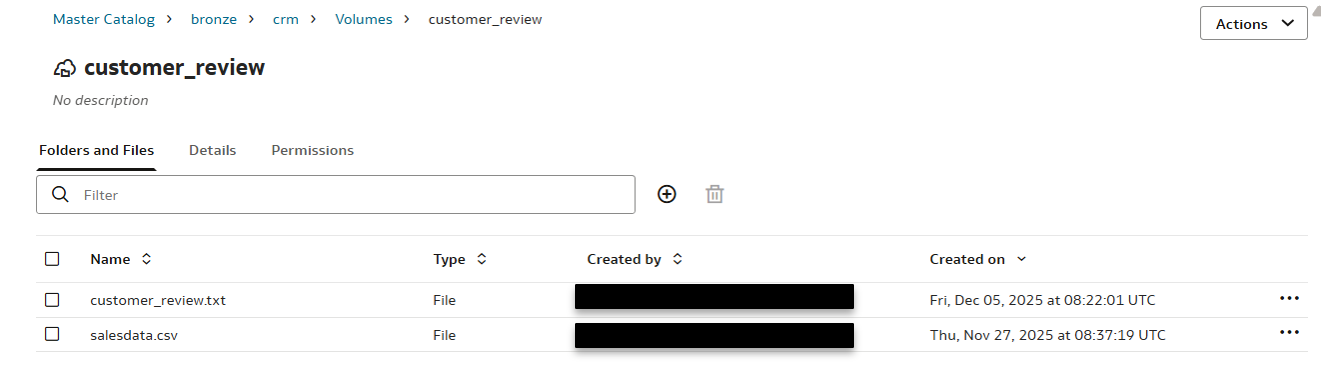
The master catalog structure of bronze layer is as shown below:
2. Silver Layer: To store the structured churn predict data.
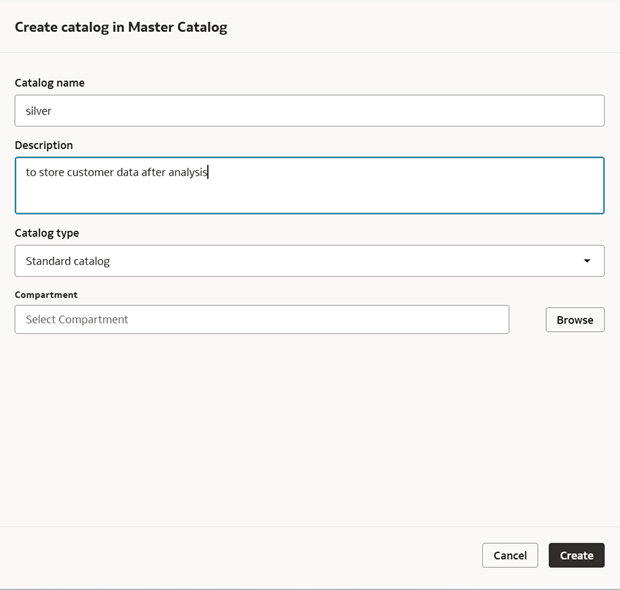
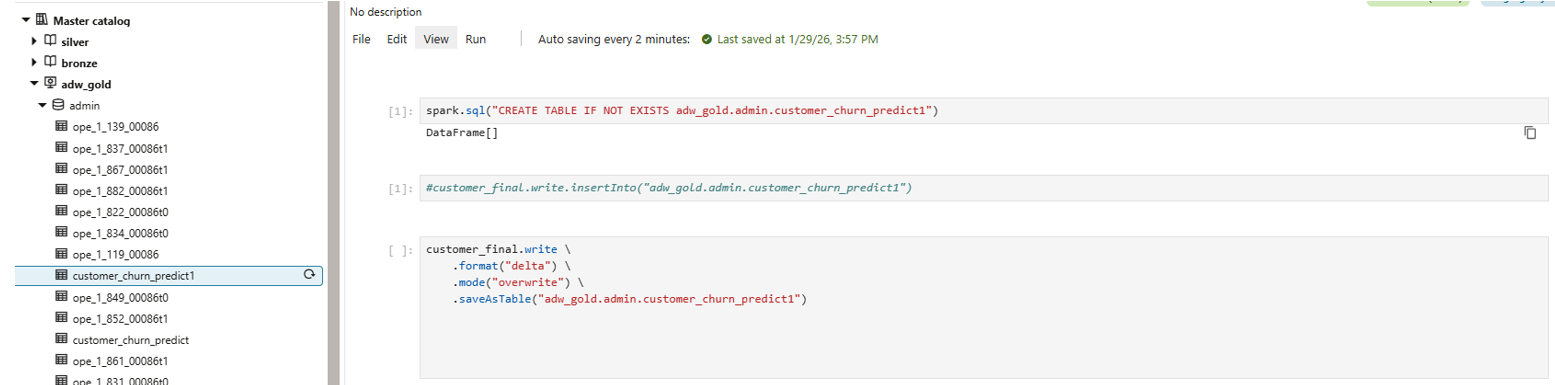
3. Gold Layer: Connection to ADW for storing the final structured prediction data.
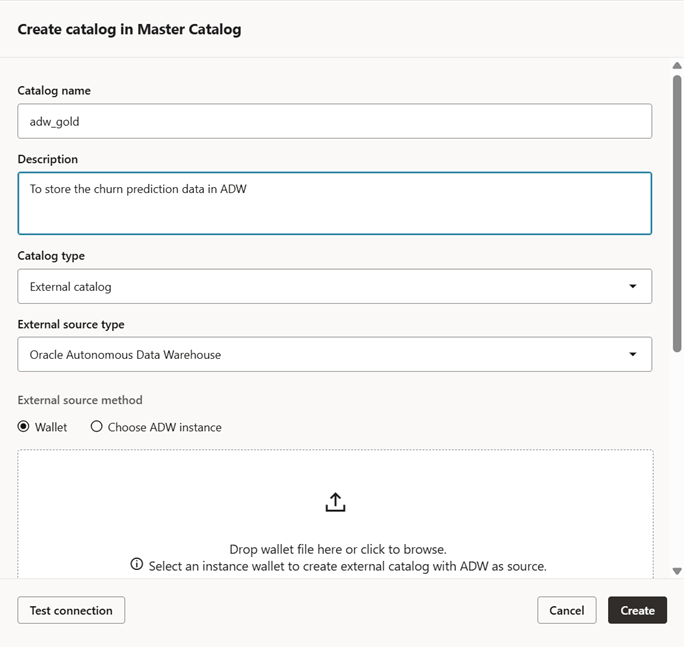
Step 5: Data Integration and Processing.
The customer review data from Object Storage is ingested and processed to extract meaningful insights such as sentiment and key phrases. This processed review data is then combined with the customer profile CSV data using a common customer identifier to create a unified dataset for churn analysis. Start with Creation of workspace.
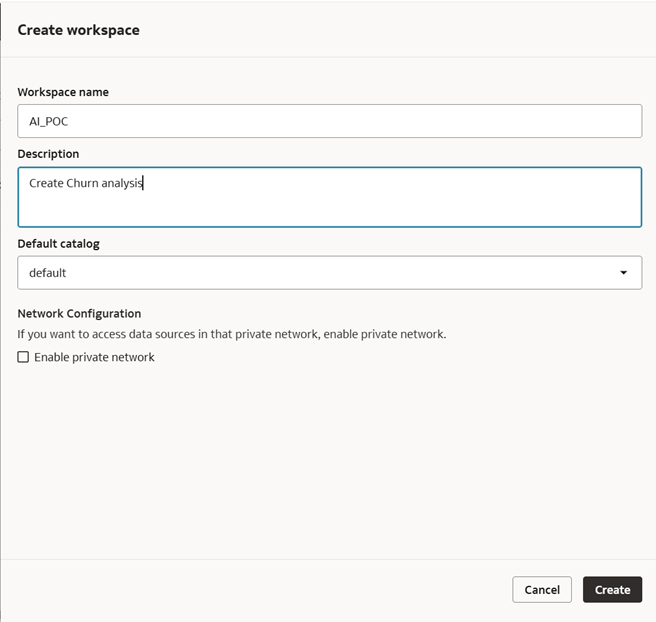
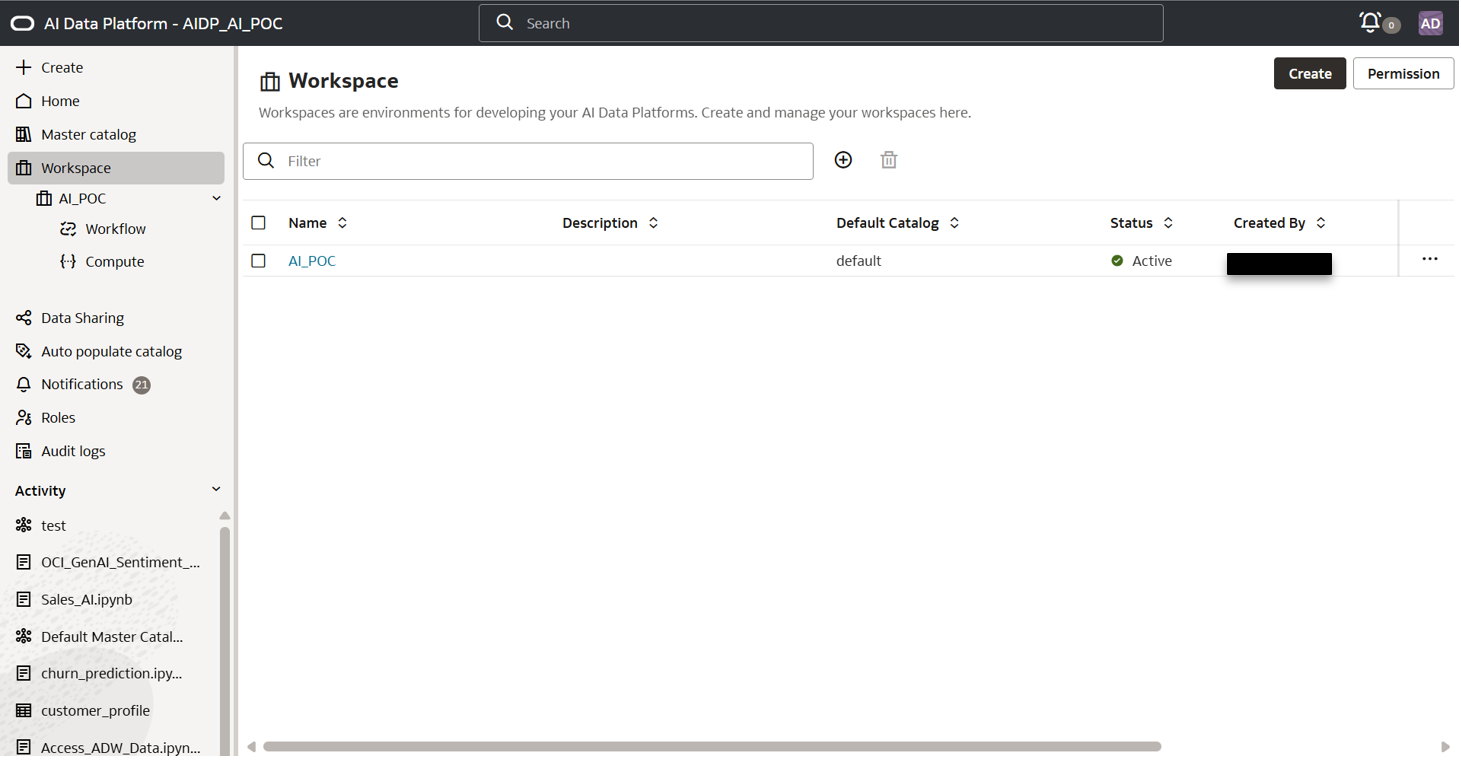
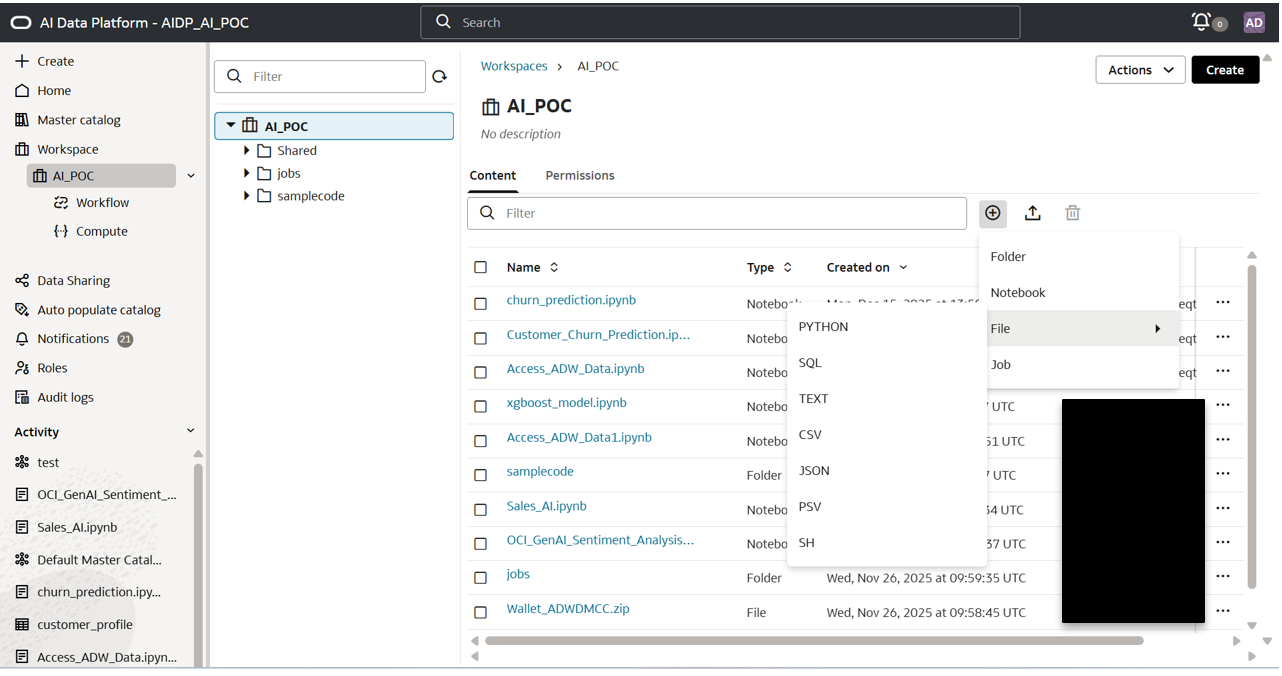
Step 6: Creating a new notebook for churn analysis.
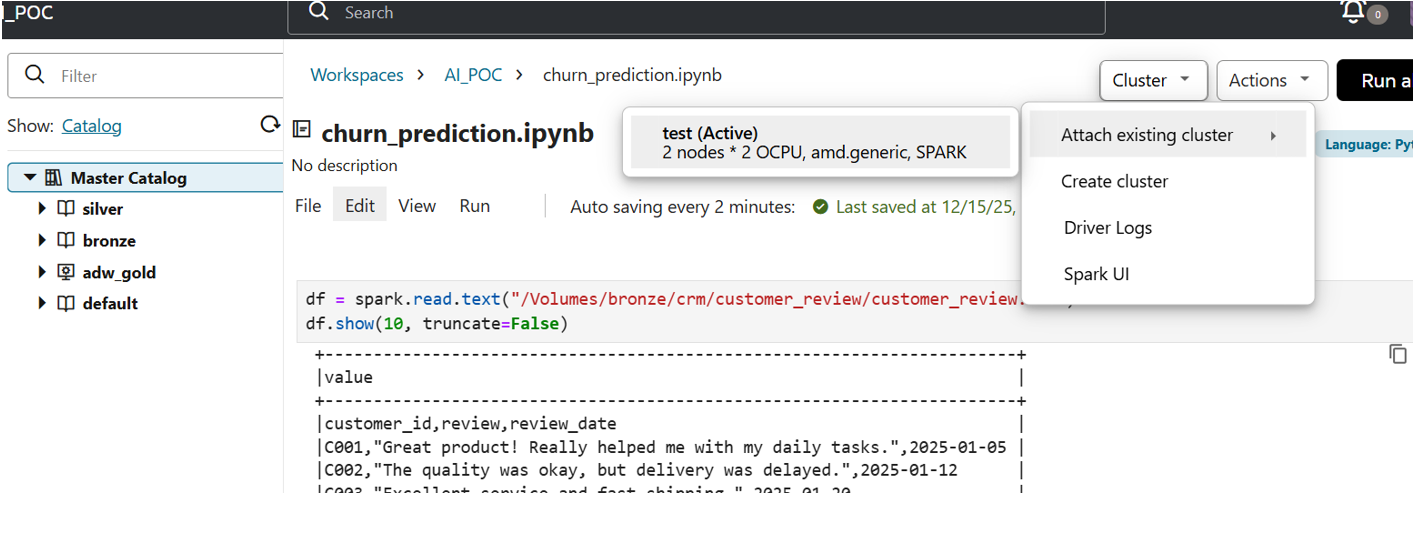
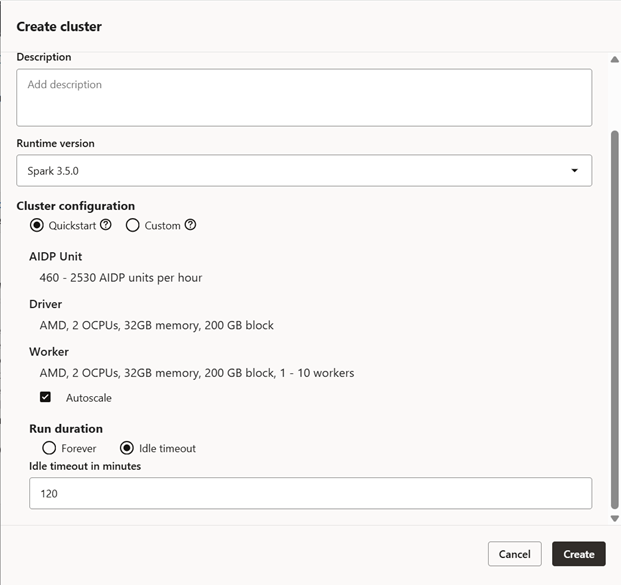
Step 7: Creating cluster to run the notebook.
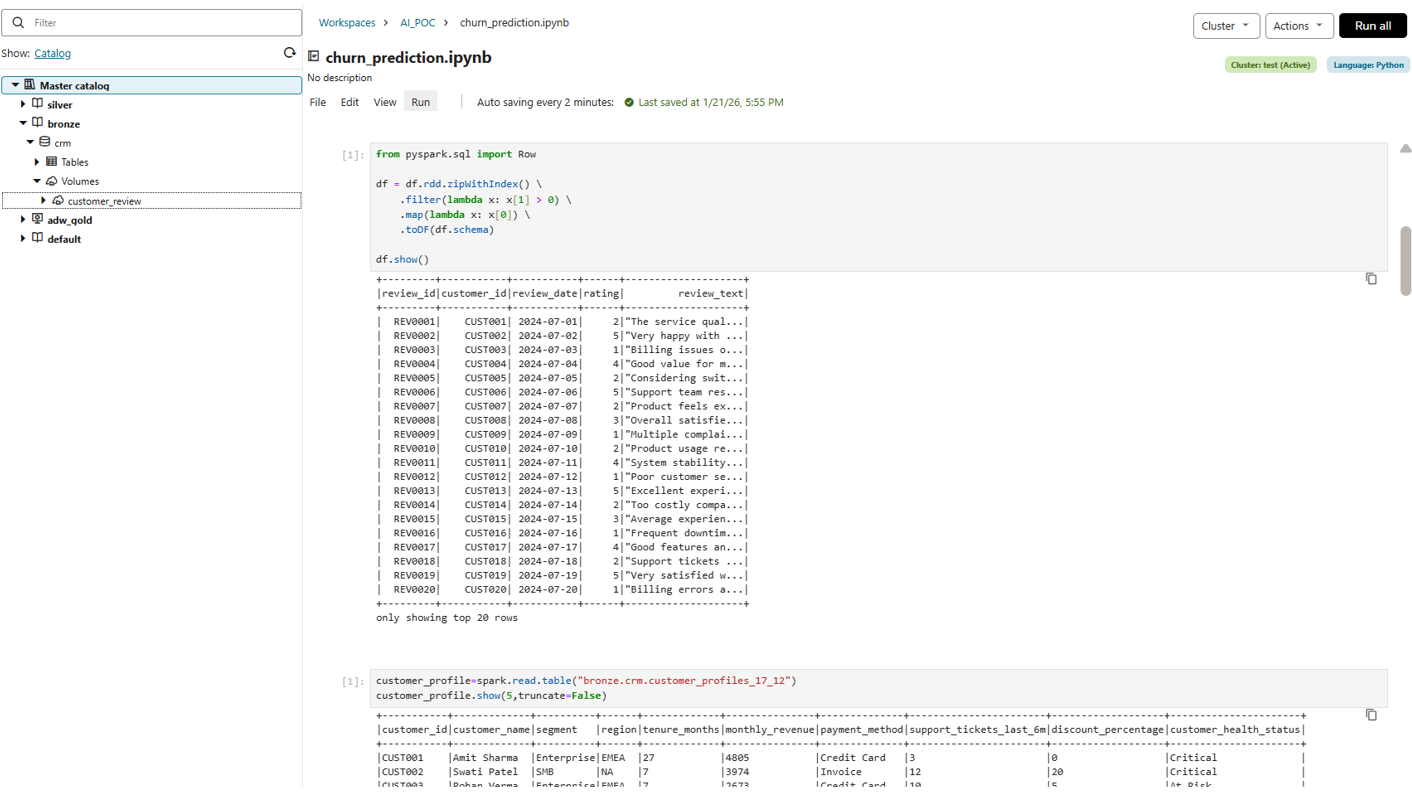
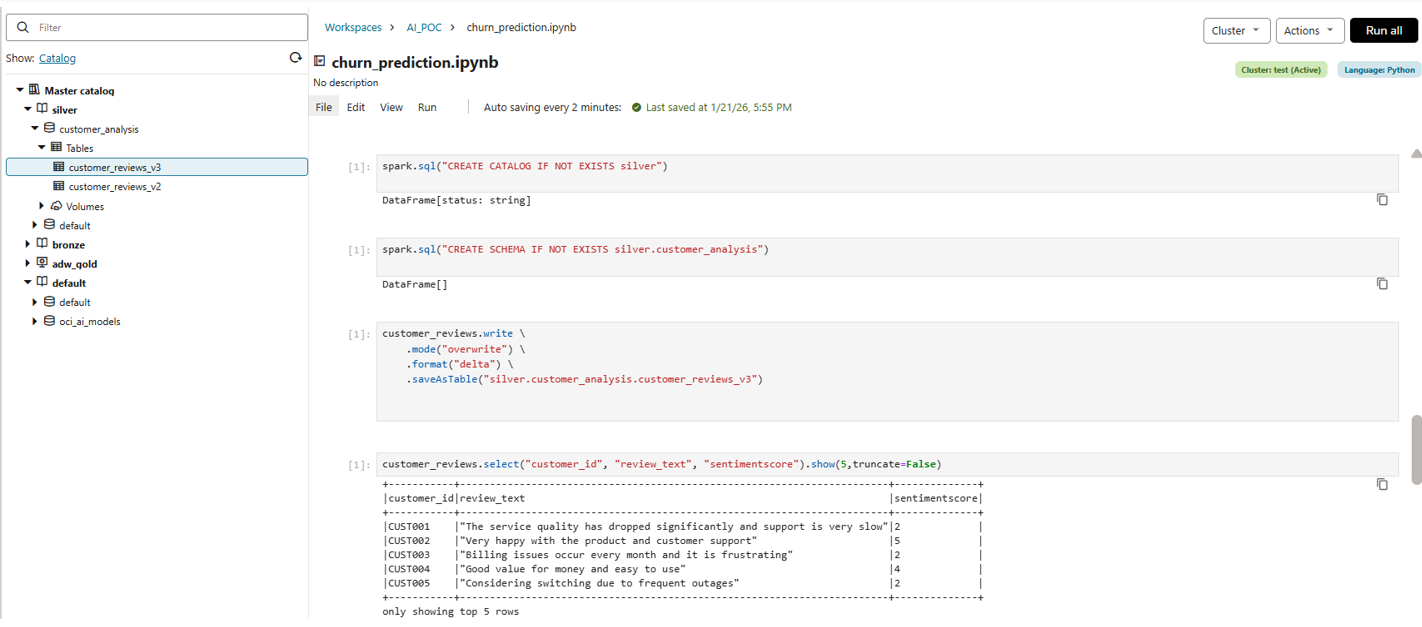
Step 8: Load raw customer review text data from the Bronze storage layer using Spark.
Parse and structure review text to extract customer IDs and review content.
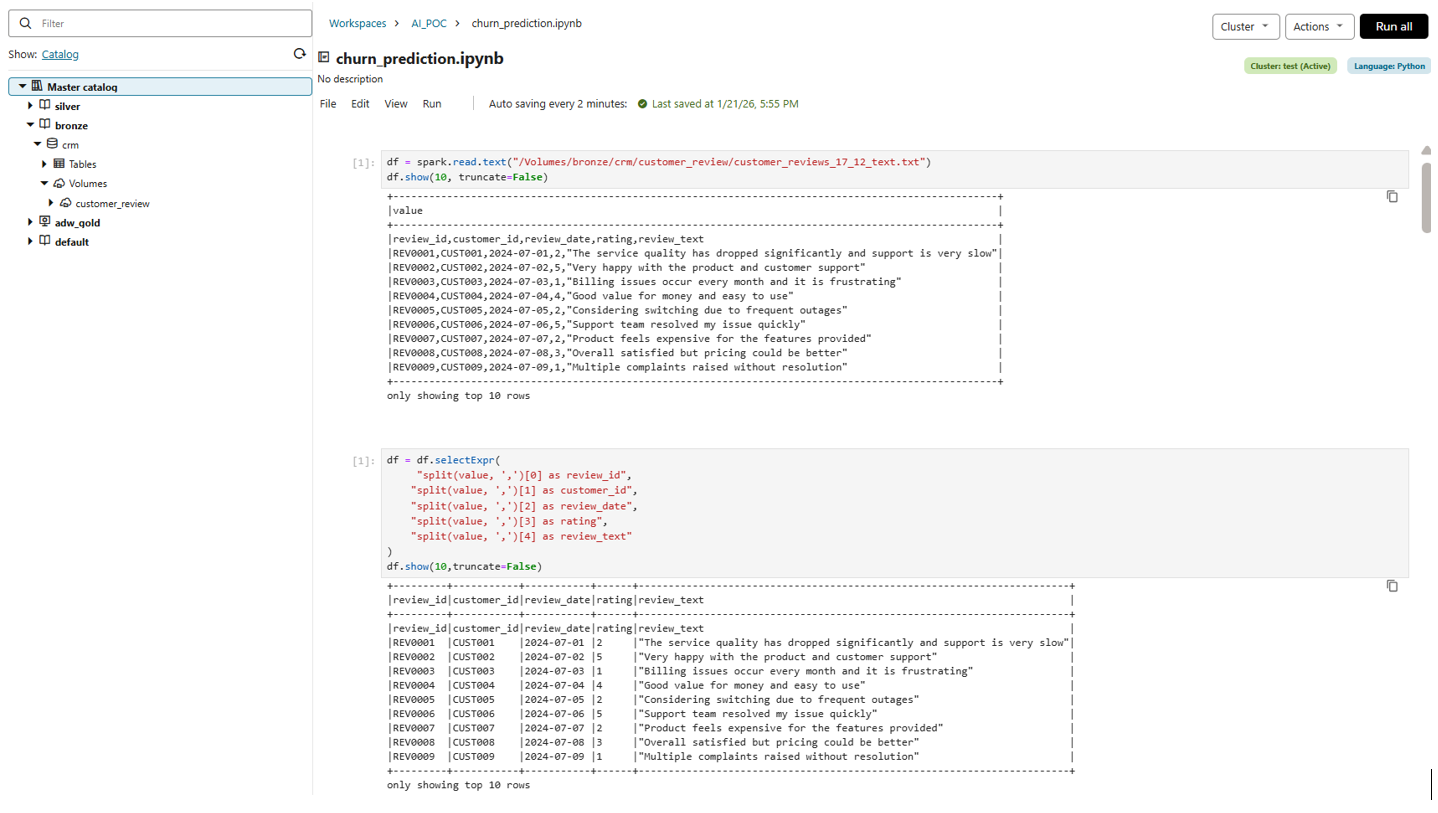
Step 9: Create a structured Spark DataFrame for customer reviews. Load customer profile data from the bronze.crm.customer_profile table.
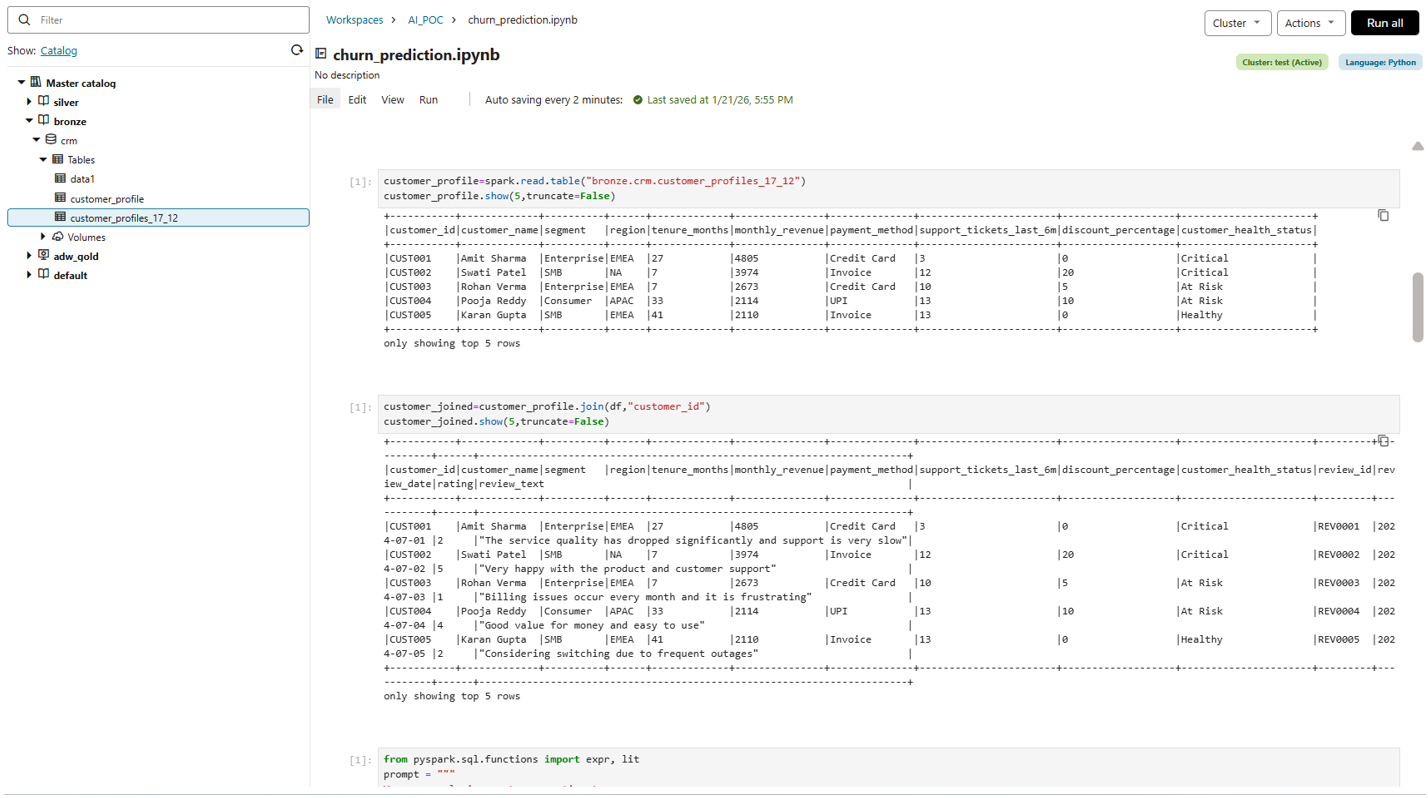
Step 10: Join customer review data with customer profile data using customer_id.
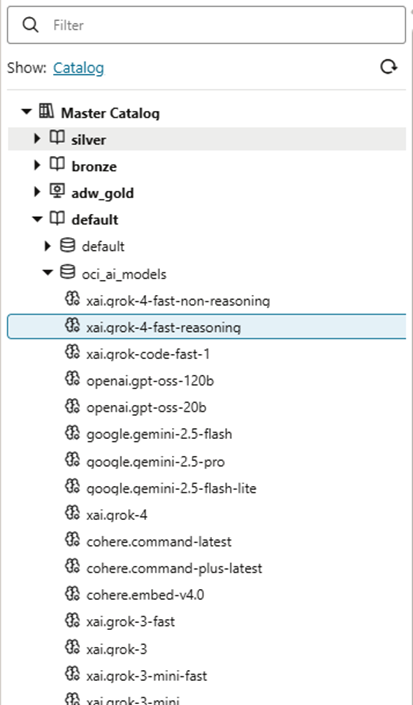
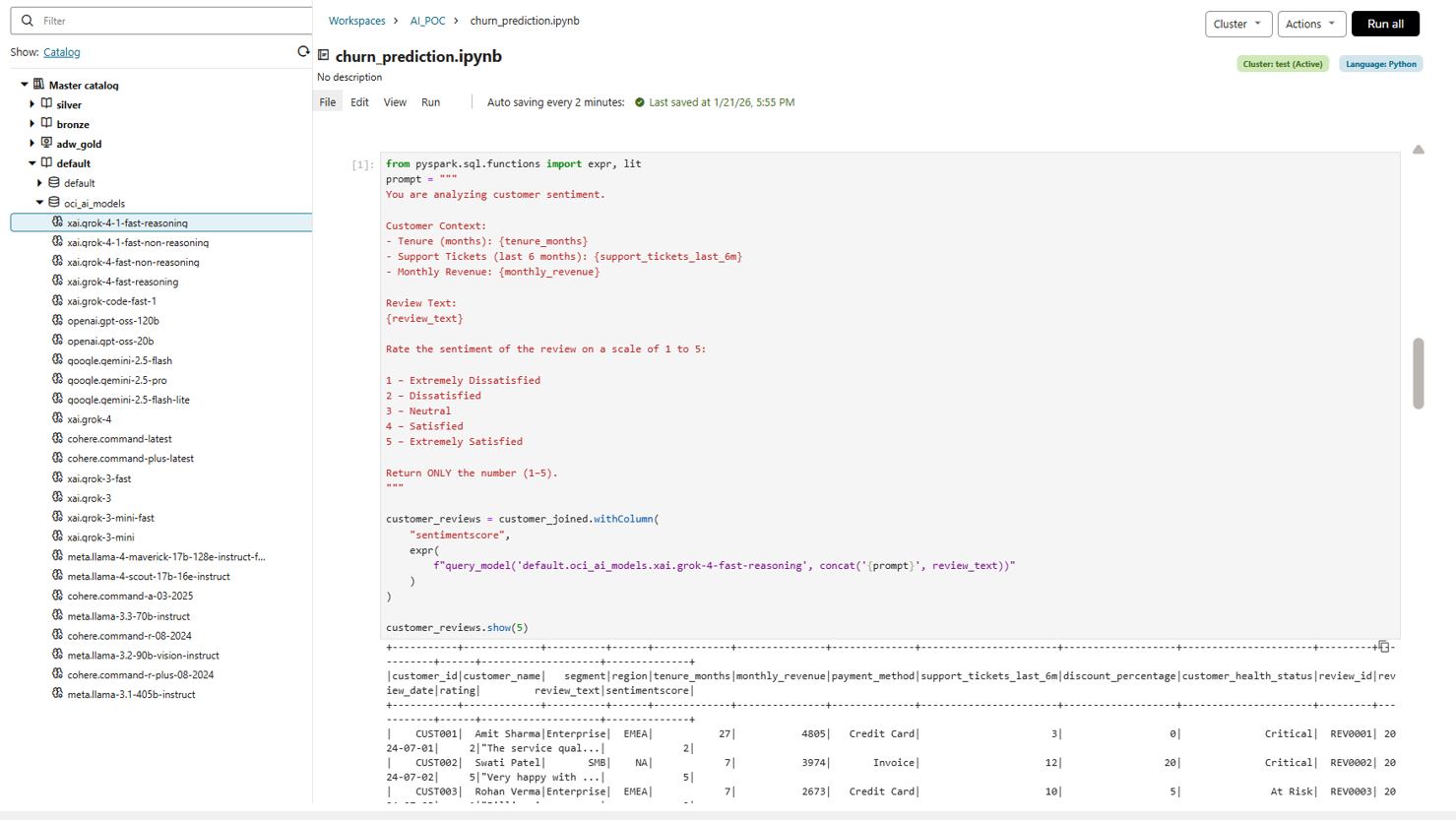
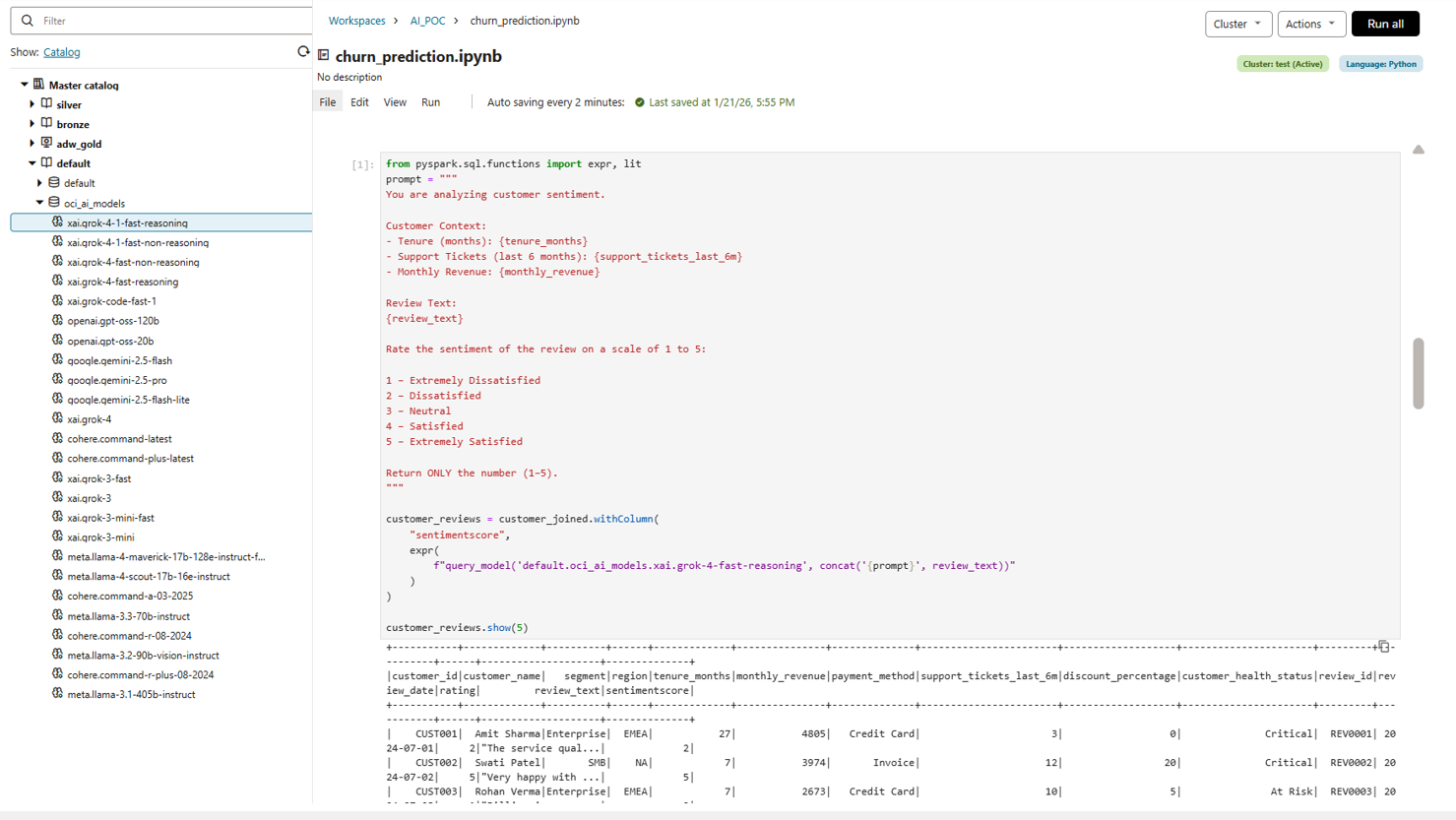
Step 11: Use AI model under default OCI AI models which consists of pre trained models for churn prediction. An AI/ML model is applied on the integrated dataset to predict customer churn. The model analyzes both structured customer attributes and insights derived from unstructured review data to identify patterns associated with churn behavior.
The output of the model includes churn probability, churn classification (e.g., likely to churn or not), and supporting analytical features.
Step 12: Insert the predicted data in silver layer which will be inserted to ADW.
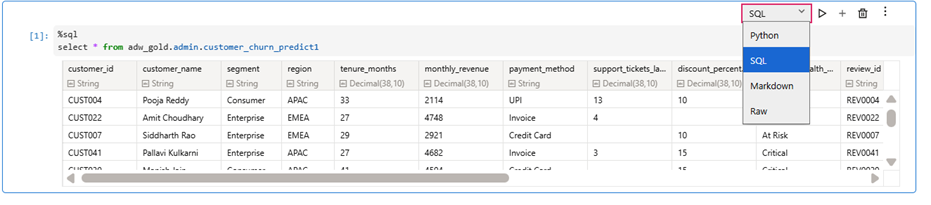
You can switch to various languages in notebook ex: Python, SQL.

Step 13: Power BI is connected directly to Oracle ADW to visualize the churn analysis results. Dashboards and reports are created to display key metrics such as churn rate, high-risk customers, sentiment impact, and trends across different customer segments.
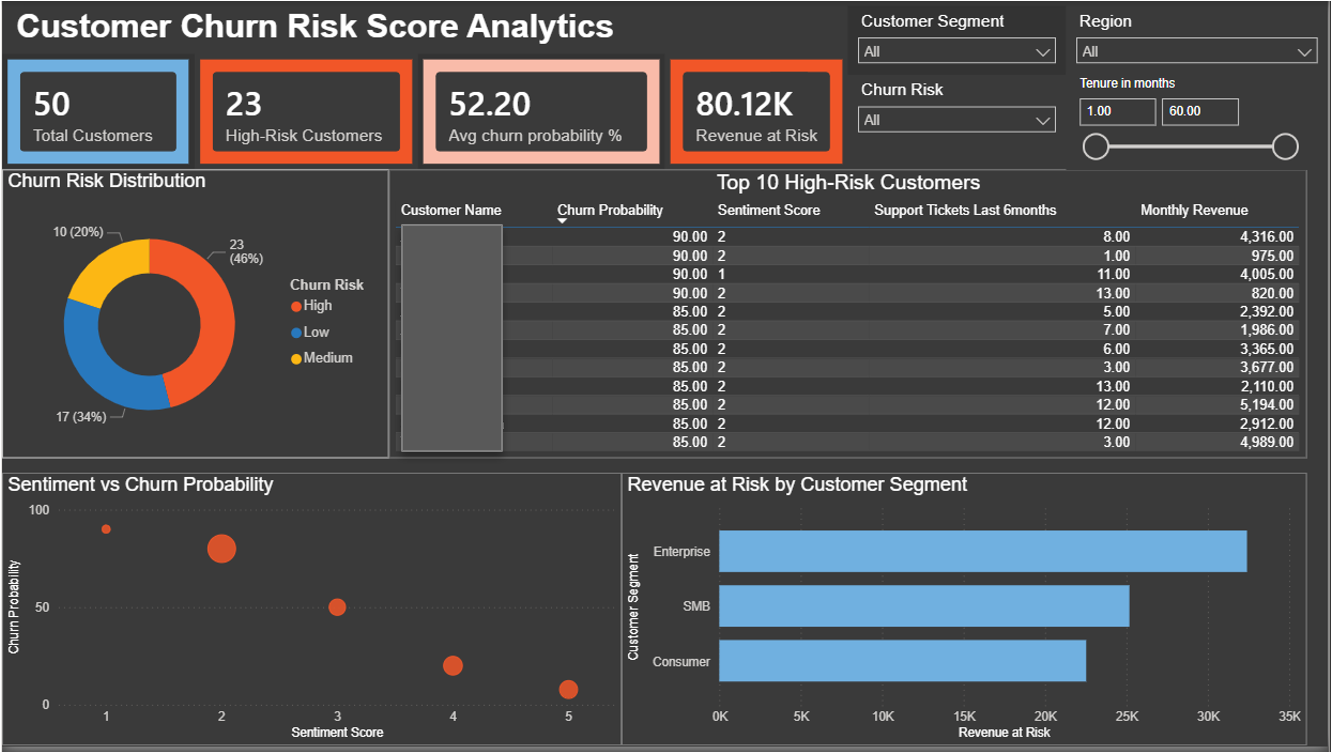
The dashboard consolidates customer profile information, sentiment analysis, churn probability, and risk classification into a single, interactive view. The purpose of this dashboard is to translate AI model outputs into meaningful business insights.
It allows teams to quickly identify customers who are at high risk of churn, understand the key drivers behind that risk, and assess the potential revenue impact.
At the top of the dashboard, key KPIs show 50 total customers, 23 high-risk customers, an average churn probability of 52.20%, and 80.12K in revenue at risk, giving a quick snapshot of overall churn exposure and business impact.
The filters on this dashboard allow us to slice and analyze churn data across different customer dimensions.
We can filter customers based on Customer Segment, Region and more, so we can focus on specific groups instead of viewing all customers together.
- The Churn Risk Distribution chart shows how customers are split across High, Medium, and Low risk categories.
- The Top High-Risk Customers table highlights customers with the highest churn probability, along with sentiment score, support tickets, and monthly revenue.
- The Sentiment vs Churn Probability chart shows a clear relationship where lower sentiment leads to higher churn risk.
- The Revenue at Risk by Customer Segment chart highlights potential revenue impact across Enterprise, SMB, and Consumer segments, enabling focused retention strategies.
Conclusion
This blog highlights how Oracle AI Data Platform streamlines the customer churn analysis journey from ingesting raw data in the Bronze layer to generating actionable insights in the Gold layer. By integrating customer profiles with AI-powered sentiment analysis from unstructured reviews, organizations gain a more accurate and holistic view of churn risk.
With seamless integration into Oracle Autonomous Data Warehouse and BI tools, Oracle AIDP enables faster insights, stronger governance, and enterprise-scale analytics. The outcome is proactive identification of at-risk customers, clearer visibility into churn drivers, and more informed retention decisions.
Oracle AI Data Platform empowers businesses to move from reactive churn management to predictive, insight-led decision-making.